
How Do You Potty Train a Puppy in a Victoria Winter?
By Anna Hakim & Perry Fanthorpe, Happy Homes Team at eXp Realty
Potty Training a Puppy in a Victoria Winter:
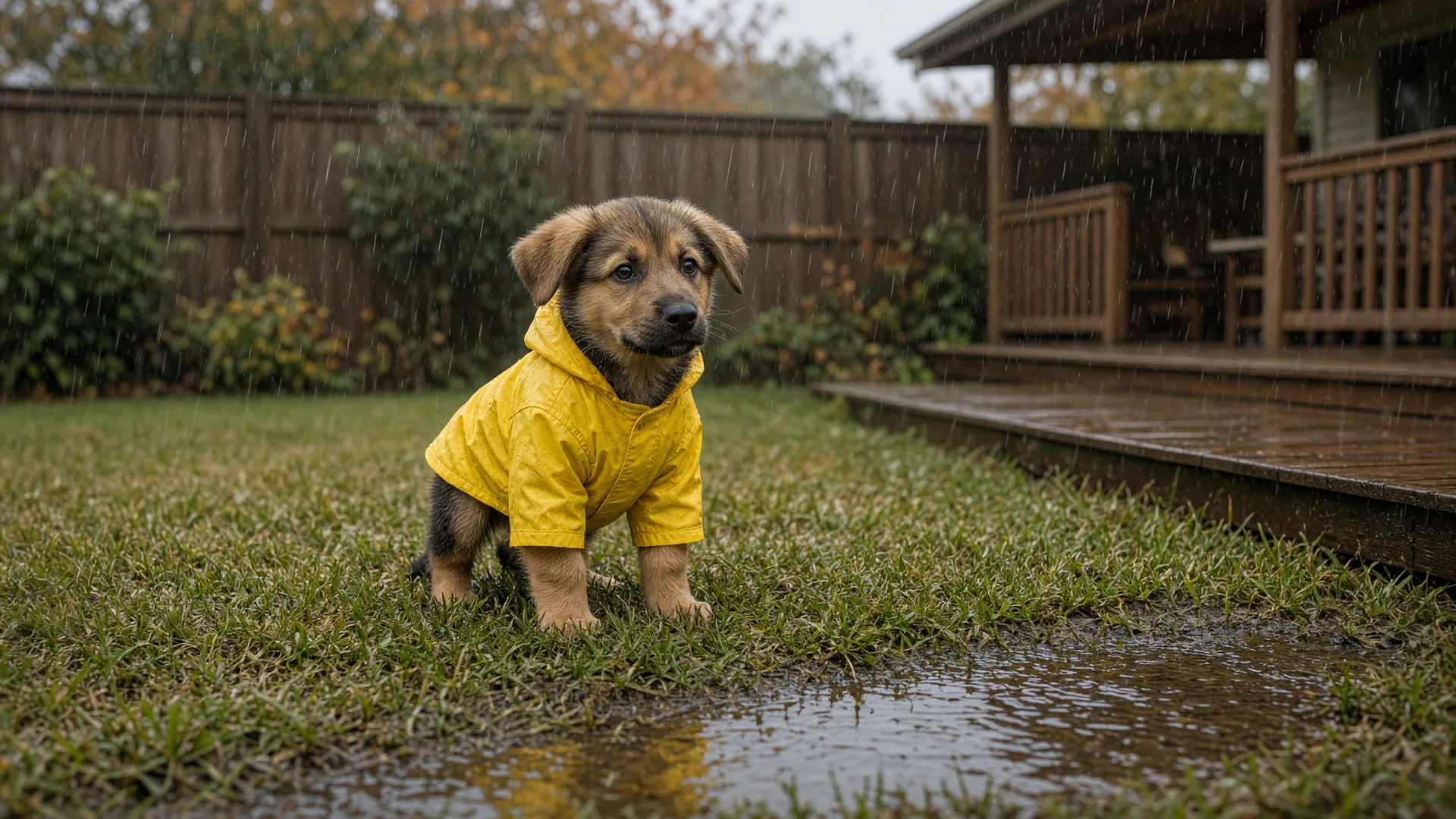
Potty training in a Victoria winter is mostly about giving your puppy a dry, close spot and a relentless schedule. The rain itself is not the problem; the problem is that a soaked puppy under a covered overhang would rather hold it, and holding it is what causes accidents on your floor forty minutes later. I trained a couple of puppies in this damp season, and the whole game is making outside easy and rewarding, so the puppy never learns that the yard is somewhere to avoid.
Why is winter training actually harder here?
Victoria gets rain on roughly 150 days a year, and the wet months line right up with the age when a puppy cannot hold a full bladder all night. A ten-week-old pup has control measured in hours at best. Add cold wet grass and a confused puppy, and it is very tempting to skip the middle-of-the-night trip and hope for the best. That is the moment the habit breaks.
The good news is Greater Victoria winters are so mild, not one of us has ever had to stomp through deep snow to do this. We mostly have drizzle, puddles, and wind. That means a dry covered spot and decent raingear are enough to keep the routine going all season.
Where should the puppy go when the yard is soaked?
Pick one spot, ideally close to the door and partly sheltered under a deck, canopy, or porch overhang. Keep it clear and consistent, and take the puppy straight there every time. On the hard rain days, a cheap turf mat or a few pavers laid in that spot gives the puppy solid ground instead of cold mud, which makes the trip much more bearable for a little pup.
Whatever you choose, do not move the spot between trips. A puppy is learning a location, not a concept, and consistency is the whole trick. Our own setup has always been a covered porch corner leading straight out to the lawn, so the transition from warm house to potty spot is short and dry for as much of the distance as possible.
How often should we actually go outside?
More than you think, especially right after every meal, nap, and play session, plus first thing in the morning and last thing at night. A general rhythm is every 60 to 90 minutes during the day for a young puppy, and at least once overnight for anything under four months old. When you see the pacing, the sniffing, or the circling, that is the signal, drop what you are doing and head out.
Praise the instant the puppy goes, before you even bring them back in, and have a tiny high-value treat ready so they connect "rainy yard" with "jackpot." Keep the trip businesslike on your end: out, wait, praise, back in. The fastest way to teach a puppy to love the rain is to give them a dry coat and a reason to go.
What about the middle of the night?
Crate the puppy overnight in a crate just big enough to stand and turn around. A puppy will not soil the space where it sleeps happily, so a correctly sized crate buys you a longer stretch than free-roaming would. Keep the crate in or near your bedroom for the first weeks so you hear the stirring early, and take the puppy straight out on a lead when they whimper, no play, no fuss.
That 2 a.m. trip in the rain is the hardest test of your resolve, and it is exactly when our four-legged teachers remind you why you do it. Put your own rain jacket by the door, keep the trip to the one spot, and it is over in two minutes. Each successful overnight slowly numbers itself down until the puppy sleeps through.
What if the puppy just refuses to go in the rain?
Do not stand in the cold and wait them out. Give the puppy about five minutes in the potty spot, and if nothing happens, bring them calmly back inside and try again in twenty minutes. Standing there shivering teaches the puppy that going out means misery, which backfires on the very next training session.
Carry a towel at the door and wipe paws on the way in so the reward and the warmth are immediate. If accidents happen because the puppy increasingly resists the rain, that is a sign to make the spot even more sheltered or to bump up how often you try. Odds are in your favour once the puppy learns that going outside ends in praise and a warm house.
When can we start real winter walks?
Once the puppy is fully vaccinated (finishing around 16 weeks, your vet confirms the exact schedule), start with short neighbourhood loops and keep them to about five minutes per month of age. The first proper outings are exciting and tiring, so keep them close to home and watch for signs of tiredness or cold in the wet. Puppies burn out fast on rain-slick sidewalks.
A well-fenced yard is a genuine asset through this whole phase, because it gives the puppy a safe, contained place to burn energy between training sessions without you hovering over a retractable lead on the street. If you are renting or house-hunting, an enclosed yard, or at least a ground-floor unit with a small private patch, is the single best thing you can line up before the puppy arrives. It is one of the quieter reasons dog owners in Victoria tend to seek out certain neighbourhoods and home types over others.
Take it one rainy day at a time. The puppy stage is intense, and it ends, and a dry routine plus a warm welcome home gets you through. For everything else in those early weeks, our dog training guide and the bringing a puppy home guide are the two reads I point new owners to first.
If you are moving with a puppy on the way, and a fenced yard is on your wish list, we would love to help you find it. Book a call with the Happy Homes Team and tell us where you want to live; we have helped plenty of Victoria families line up the right yard for the right puppy.