
Fireworks & Noise Anxiety in Dogs: A Victoria Owner's Survival Guide
By Anna Hakim & Perry Fanthorpe, Happy Homes Team at eXp Realty
Fireworks & Noise Anxiety in Dogs: Victoria Owner's Survival Guide:
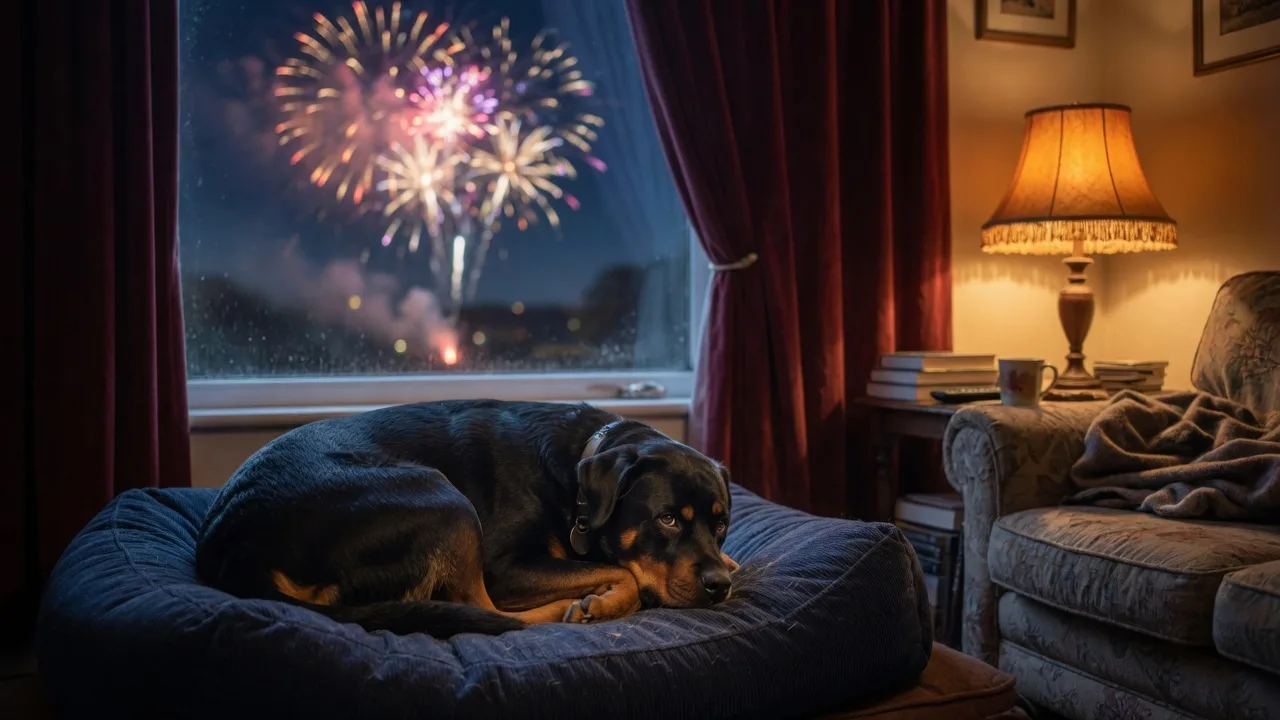
Ziggy does not do fireworks. The first time we experienced Canada Day in Victoria with him, we learned the hard way. We were living in Saanich, about four kilometres from the Inner Harbour, and the moment those first shells went off at 10:20 p.m., our 110-pound Rottweiler launched himself off the couch, knocked over a lamp, and tried to climb inside the dryer. He was trembling, drooling, and completely inconsolable. Sahara, our 13-year-old Lab mix, just looked at him like he had lost his mind. That night taught us everything we needed to know about noise anxiety in dogs, and every year since, we have been prepared.
If your dog is afraid of fireworks, you are not alone. Noise anxiety is one of the most common behavioural issues in dogs, and Victoria's summer fireworks season is intense. Between Canada Day, the HarbourCats games, private backyard displays, and municipal events, there are multiple nights each summer where the sky over Greater Victoria lights up and the ground shakes. Here is what actually works, based on veterinary guidance and our own experience with Ziggy.
When Do Fireworks Happen in Victoria?
Knowing the schedule is half the battle. If you know a fireworks night is coming, you can prepare days in advance instead of scrambling at 10 p.m. Here are the major fireworks events in Greater Victoria for summer 2026:
Victoria Fireworks Calendar , Summer 2026
- June 6: Victoria HarbourCats fireworks night at Royal Athletic Park (1814 Vancouver Street). Fireworks after the game.
- June 30: Victoria HarbourCats Canada Day Eve fireworks at Royal Athletic Park. Game plus fireworks display.
- July 1: City of Victoria Canada Day Celebration, Inner Harbour / Legislative Precinct. Fireworks at approximately 10:20 p.m. , the largest display in Victoria since Canada 150 in 2017.
- August 3: Victoria HarbourCats BC Day fireworks at Royal Athletic Park. Fireworks after the game.
- Private backyard displays: Throughout July and August, individual homeowners set off fireworks, especially on long weekends. You cannot predict these, which is why preparation matters.
Add to that the crack of a baseball bat at Royal Athletic Park, car alarms triggered by concussions, and the echo off buildings in the harbour, and you have a recipe for multiple stressful nights across the summer. Start preparing now, not the night of.
Why Are Dogs So Afraid of Fireworks?
Dogs hear at a much wider frequency range than humans, up to 65,000 Hz compared to our 20,000 Hz. Fireworks produce sound in the 160–180 dB range at close distance, which for a dog is physically painful, not just scary. Add in the unpredictable timing, the flashing lights, the vibrations, and the smell of gunpowder, and fireworks are a multi-sensory assault that no amount of "being a tough dog" can override.
Ziggy is not being dramatic when he tries to hide in the dryer. His brain is telling him he is in danger, and every instinct he has is screaming at him to find a safe, enclosed space. That reaction is hardwired, not a training failure. What we can do is make the experience less terrifying and give him tools to cope.
Step 1: Create a Safe Space Before Fireworks Season
The single most effective thing you can do is set up a dedicated safe space and let your dog get comfortable with it before fireworks night. Do not wait until the explosions start.
Building a Fireworks Safe Room
- Choose an interior room. A basement, bathroom, or interior bedroom with no windows or minimal exterior wall exposure. The farther from windows, the better.
- Close and cover windows. Draw curtains, close blinds, and if possible hang a heavy blanket over the window frame. This blocks both light flashes and muffles sound.
- Add their bed, crate, or both. If your dog uses a crate, move it to the safe room and drape a blanket over the top. If they do not crate, put their favourite bed or blankets on the floor in the quietest corner.
- Layer white noise. A fan, a white noise machine, or a TV playing at moderate volume helps mask the percussive sounds of fireworks. Soft classical music or nature sounds work well , Cornell Veterinary Medicine recommends this approach.
- Add enrichment. A frozen Kong stuffed with peanut butter or wet food, or a Lickimat with yogurt, gives your dog something to focus on. Licking is naturally calming for dogs.
Let your dog use this room regularly during calm days , treat it as a positive space, not a punishment. Feed them in there, give them chews in there, let them nap in there. By the time fireworks night arrives, the room itself should feel safe.
Step 2: Exercise Early, Bathroom Breaks Early
On fireworks nights, get a long walk or play session in during the afternoon, well before dark. A tired dog is a calmer dog, and you want to get their energy and bathroom needs handled before the displays start.
Keep dogs leashed outdoors after dark on fireworks nights. Even normally reliable dogs can panic and bolt when a shell goes off overhead. Make sure their collar has their CRD licence tag and your phone number , this is not the night to find out the tag fell off. For more on licensing, see our summer safety licensing guide.
Step 3: Talk to Your Vet About Medication
If your dog has severe noise anxiety , and we mean trembling, drooling, destructive behaviour, attempting to escape, or physical symptoms like vomiting or diarrhea , talk to your veterinarian about anti-anxiety medication. This is not a failure. It is the same as taking ibuprofen for a headache: your dog's nervous system is in overdrive, and medication can bring it back to a manageable level.
Common medications that vets in Greater Victoria prescribe for fireworks anxiety include:
Vet-Prescribed Fireworks Anxiety Medications
- Trazodone: A serotonin reuptake inhibitor that calms without heavy sedation. Often prescribed for situational anxiety. Give 60–90 minutes before the event.
- Gabapentin: An anti-seizure and anti-anxiety medication that also provides mild sedation and pain relief. Frequently combined with trazodone for severe cases.
- Sileo (dexmedetomidine) gel: An FDA-approved gel applied to the gums specifically for noise aversion in dogs. Non-sedating at the recommended dose. Apply 30–60 minutes before fireworks.
- Benzodiazepines (alprazolam / lorazepam): Fast-acting anti-anxiety medications for acute panic. These can be sedating and may cause coordination issues, so trial them at home first.
Important: Trial any new medication 5–7 days before a fireworks event. You need to know how your dog responds, what dose works, and whether there are side effects. Do not wait until July 1st to try trazodone for the first time. And never give your dog human medication without veterinary direction , dosing is weight-dependent and some human drugs are toxic to dogs.
Step 4: Non-Medication Calming Tools
For dogs with mild to moderate anxiety, or as a complement to medication, several tools can help:
- ThunderShirt or anxiety vest. Provides gentle, constant pressure around the chest and torso, similar to swaddling. Research shows it reduces anxiety in about 80% of dogs, according to the manufacturer. Put it on before the fireworks start, not during.
- Adaptil diffuser or collar. Releases dog-appeasing pheromones, the same scent a mother dog produces to calm her puppies. Plug a diffuser into the safe room 2–3 days before a fireworks event so the scent is established.
- Calming supplements. Products containing L-theanine, casein (Zeal Q), or chamomile are available over the counter at local pet stores. Evidence is mixed, but many dog owners report benefit. Talk to your vet about brand recommendations.
- Counterconditioning (long-term). Play recorded firework sounds at very low volume while giving high-value treats. Gradually increase the volume over weeks. This re-wires the association from "scary noise" to "treats are coming." Start months before fireworks season.
What Not to Do
This part matters. Well-meaning advice often makes noise anxiety worse:
- Do not punish fearful behaviour. Scolding a dog for shaking, barking, or hiding teaches them that their fear makes things worse. It does not fix the fear; it adds shame to the equation.
- Do not force them to "face it." Making a dog sit outside during fireworks to "get used to it" is flooding, a counterproductive technique that can intensify the phobia. Let them retreat.
- Do not over-comfort in a panicked state. Calm, steady presence is fine , sit with them, speak softly, offer a treat. But frantic petting, high-pitched reassurance ("It's okay, it's okay!"), and anxious energy from you can reinforce the idea that there is something to be afraid of.
- Do not leave them outside. This seems obvious, but every year dogs escape from yards during fireworks. A panicked dog can jump a fence they have never cleared before. Bring them inside well before dark.
The Day-Of Checklist
Here is the checklist we run through before every fireworks night with Ziggy:
Fireworks Night Checklist
- Long walk or play session in the afternoon. Burn energy and handle bathroom needs before dark.
- Safe room is set up. Bed or crate, blankets over windows, white noise running, enrichment treats ready.
- Medication given (if prescribed). 60–90 minutes before expected fireworks. Follow your vet's dosing instructions exactly.
- ThunderShirt or anxiety vest on. Put it on before the noise starts, while your dog is still calm.
- Collar tag checked. Licence tag and phone number are on the collar. Microchip registration is up to date.
- Doors and gates secured. Check that all exterior doors are latched, the gate is closed, and escape routes are blocked.
- Stay with your dog. If possible, be in the safe room with them. Your calm presence is the most powerful tool you have.
Beyond Fireworks: Other Summer Noise Triggers
Fireworks are not the only noise anxiety trigger in Victoria's summer. Keep an eye out for:
- Thunderstorms. Less common in Victoria's dry summers, but when they hit, the same safe-space strategy applies. Victoria gets about 36 thunderstorm days per year, mostly in summer.
- Construction noise. Pile drivers, jackhammers, and heavy equipment around new developments can trigger anxiety in sensitive dogs, especially in denser neighbourhoods like downtown and Vic West.
- Car backfire and engine noise. Unpredictable loud noises from vehicles, especially modified exhausts, can cause the same fear response as fireworks.
The safe-space approach works for all of these. Set it up once, keep it available all summer, and your dog always has somewhere to retreat.