
How Should I Introduce a Second Dog to My Resident Dog?
By Anna Hakim & Perry Fanthorpe, Happy Homes Team at eXp Realty
Opening Your Home to a Second Dog:
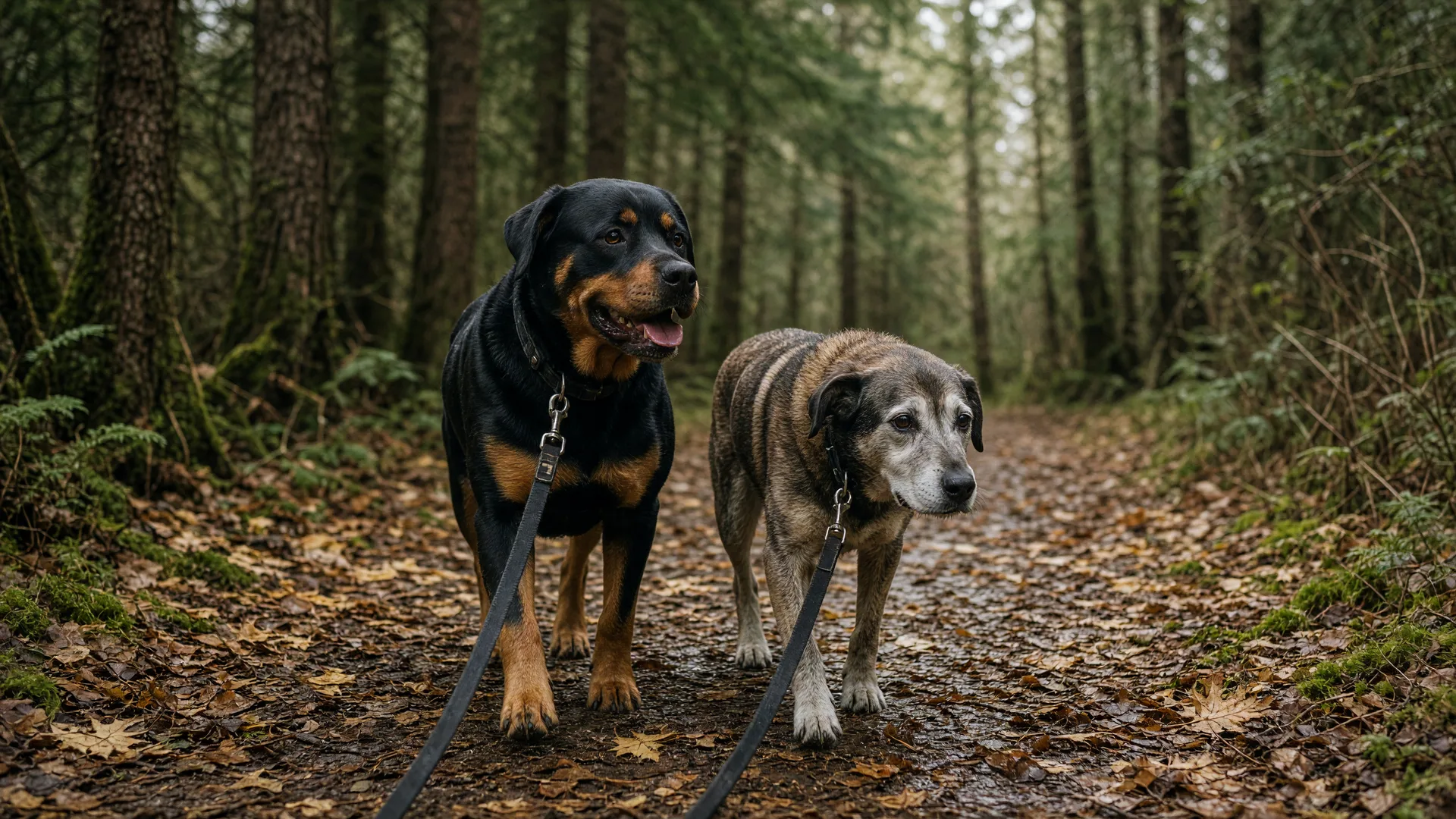
Start the introduction on neutral ground with both dogs on loose leashes and one handler each, and walk them in the same direction before you allow any face-to-face sniff. Never do the first meeting in your yard, on your porch, or in the living room, because your resident dog reads that as defending its territory. Done right, most pairs are living comfortably together in 2 to 4 weeks; done wrong, the first bad encounter can haunt both dogs for months.
We run a two-dog house, a 6-year-old Rottweiler and a 13-year-old Lab mix, and Perry and I have guided plenty of buyers through adding a second dog to their family. Grab two leashes, a bag of the highest-value treats you own, and a friend who can hold one of the dogs, because you cannot do this alone.
Should I get a second dog in the first place?
A well-matched second dog can take pressure off a single dog, give it a playmate, and make your home feel fuller. But it doubles the walks, the vet bills, and the clean-up, and it does nothing for you if you are getting it to fix a lonely or under-exercised current dog. A bored dog rarely benefits from company it cannot play with.
Match on temperament and energy, not looks. Behaviour specialists agree a spayed or neutered male paired with a spayed female is the lowest-conflict combo, while two females, or two dogs close in age and drive, are the highest risk. This is where a foster-based rescue shines: you get real weeks of evidence about how a dog lives before you commit, instead of guessing from a one-hour meet.
Where should the first meeting happen?
Somewhere neither dog considers home, a quiet street, an empty park, or the edge of a parking lot. Walk them toward each other slowly, 20 to 30 yards apart at first, closing the gap only while both stay loose and relaxed, soft eyes, loose body, still able to take a treat and respond to their name.
Keep the leashes loose. A taut leash raises tension and can itself trigger reactivity. If you can, walk them in parallel in the same direction rather than straight at each other, because side-by-side walking is how dogs read one another as safe movement, not a threat.
How long should the first sniff last?
Keep the initial nose-to-nose sniff to about two to three seconds, then cheerfully call each dog away and reward. Repeat these short sniffs instead of staging one long stare-down, and read the space between them: a loose, wavy tail and a relaxed mouth are good, while a hard stare, stiff posture, raised hackles, or a freezing dog is your signal to add distance.
End the first session on a calm note, a short low-key walk together, then take the dogs home separately. The goal of day one is neutral calm, not lifelong friendship. If you rush to a big reunion and it turns ugly, you are fighting for weeks to undo a single mistake.
What happens when we get home?
Let the new dog into the house first, without the resident dog present, so it can get its bearings for a few minutes. Then bring the resident dog in with both still leashed. For the first week or two, think parallel lives rather than forced bonding: feed in separate rooms or crates, walk and train separately, and supervise every interaction.
Keep everything the resident dog values, its bowl, bed, crate, best toys, and your undivided attention, managed and separate. The most common trigger for fights is resource guarding, and a resident dog that feels replaced is a resentful one. Give your first dog uninterrupted one-on-one time and keep its old routine as close to unchanged as you can.
How long until they are comfortable together?
Confident, social adult dogs often accept a newcomer within a few days to a week or two, and most pairs reach comfortable coexistence in about 2 to 4 weeks. Give it 6 to 8 weeks or longer if your resident dog is a senior like our Sahara, or anxious or reactive. The old 3-3-3 rule is a useful frame: three days to decompress, three weeks to settle into a routine, three months to truly feel at home.
Do not leave them alone unsupervised at the "they were totally fine for two days" stage. Calm is not bonding, so keep the gates and crates in place for at least a couple of weeks, and manage any high-value chews or meals permanently. If you hit stiffness, staring, or a growl that does not resolve when you separate them, slow way down, and consider bringing in a certified trainer or behaviour consultant rather than pushing through.
Common questions about adding a second dog
Is a boy and a girl the best pairing?
Generally yes. A spayed or neutered male with a spayed female is the lowest-conflict match, while two females or two close-in-age dogs tend to carry more risk.
Can I let them meet in my backyard?
No. Your resident dog treats the yard as territory, so a first meeting there invites guarding. Meet on neutral ground, then bring the new dog inside first.
How long until I can leave them alone together?
Not during the first week or two. Keep them separated when unsupervised until they are reliably relaxed together, and permanently separate them for meals and high-value chews.
Where can I meet a dog to introduce first?
A quiet, neutral public space is ideal. Many local rescues like RainCoast Dog Rescue and the Victoria Humane Society support foster-based and meet-and-greet trials, which give you a real test run.
Before you fall for a second dog, check that your home can actually hold one. A condo's strata pet bylaws, a townhouse's fence line, and a backyard that backs onto a busy road all matter with two dogs in the mix. Our best neighbourhoods for dog owners guide and our Victoria dog training page are good next reads, and when you are ready to move with both dogs in mind, book a call with the Happy Homes Team and we will find you a place with room for everyone, crates and all.

By Anna Hakim & Perry Fanthorpe
Happy Homes Team at eXp Realty, Victoria BC
Last updated: November 9, 2026
Anna and Perry are Greater Victoria Realtors, AI Certified through KREM Institute, and live with two dogs of their own, a 6-year-old Rottweiler and a 13-year-old Lab mix. They have introduced more dogs across Victoria's fences, yards, and stratas than they can count.