
What Happens If My Neighbour Complains About My Dog Barking in Victoria?
By Anna Hakim & Perry Fanthorpe, Happy Homes Team at eXp Realty
Dog Barking Complaints in Greater Victoria:
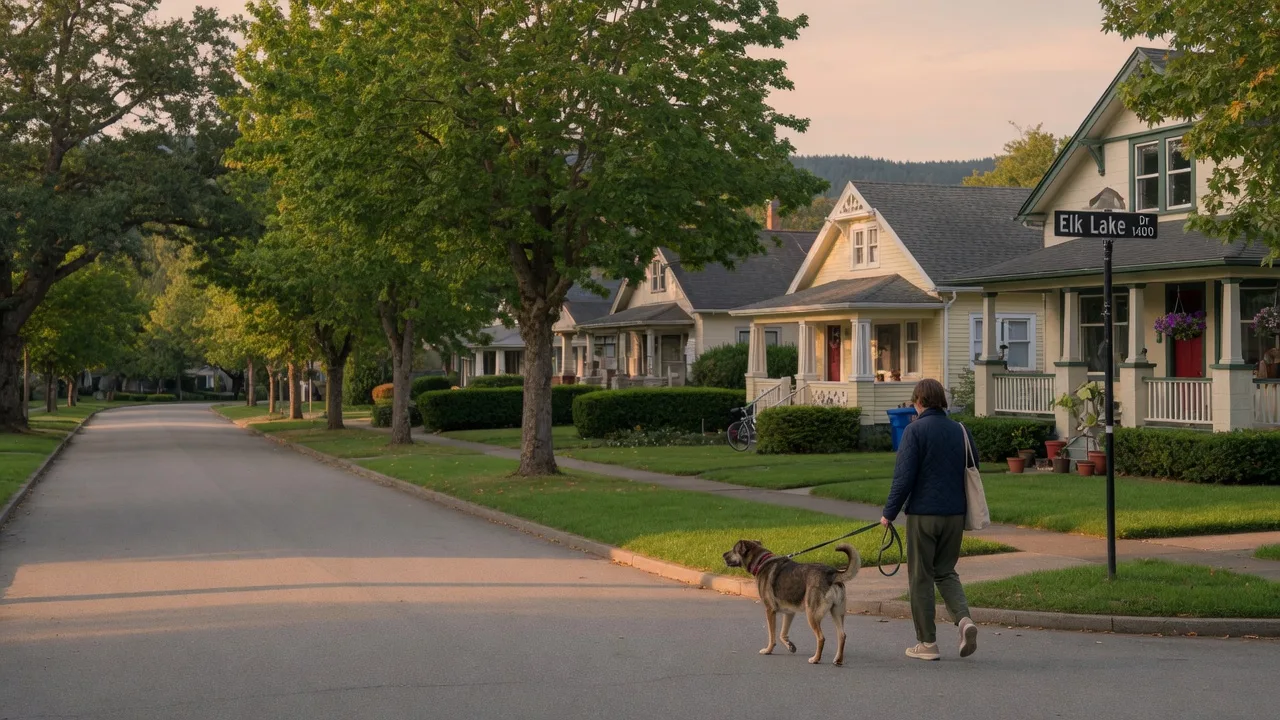
If your neighbour calls in a barking complaint against your dog in Greater Victoria, the process is predictable: you get a verbal warning first, then a written warning, then a fine that starts around $50 to $200 per day depending on your municipality. But the more important question is whether the complaint was reasonable in the first place, because the definition of "excessive barking" is narrower than most people think.
I have been on both sides of this equation. Sahara went through a phase a few years ago where she barked at every passerby through the fence, and our neighbour was patient enough to talk to us about it before filing a complaint. More recently, a buyer client of ours backed out of a condo purchase after learning the unit next door had an active barking complaint history. Noise issues between neighbours are one of the most common sources of conflict in multi-unit buildings, and for dog owners, understanding the rules and your options makes a real difference.
What actually counts as excessive barking in Victoria?
Each municipality defines excessive barking slightly differently. In the City of Victoria, a dog is considered to be making excessive noise if it barks continuously for 10 minutes or more without significant rest, or sporadically for a cumulative total of 15 minutes or more within a single hour. Saanich uses a similar 10-minute continuous barking standard under its Noise Suppression Bylaw. Oak Bay's Animal Control Bylaw prohibits "any habitually noisy dog" without setting a specific time threshold, which gives bylaw officers more discretion.
Langford and the CRD use broader language under the Keeping of Animals Bylaw: no owner shall permit a dog to cry or bark in a manner that disturbs the quiet, peace, rest, enjoyment, comfort, or convenience of the neighbourhood. That is a wider net, which means a barking complaint in Langford can have a lower threshold than in Victoria or Saanich. The Langford Noise Regulation Bylaw sets penalties ranging from $200 to $10,000 upon summary conviction, though first offences typically start at the lower end.
How does the barking complaint process work?
The process is complaint-driven. That means bylaw officers do not patrol for barking dogs. They only respond when a neighbour files a formal complaint. In Victoria and Esquimalt, the Victoria Animal Control Society (VACS) handles animal bylaw enforcement. In Saanich, it is the municipal bylaw office. In Oak Bay, animal control is handled through the district's own bylaw department.
The typical sequence: a neighbour calls or fills out a complaint form online. An officer visits the property, usually unannounced, to assess the situation. Unless the barking is extreme and ongoing at that moment, the first visit results in a verbal warning or a letter. A second complaint within a set period (usually 30 to 90 days, depending on the municipality) triggers a written warning. A third complaint typically results in a fine. In most cases, you get two chances to resolve the issue before any money changes hands.
What are the actual fines in each municipality?
- Victoria: $150 per day. Each day the barking continues is a separate offence.
- Saanich: Fines are set under the Ticket Bylaw; specific amounts vary but start at similar levels to Victoria for first offences.
- Oak Bay: $50 per day. Relatively low, but compliance orders can escalate if ignored.
- Langford: $200 to $10,000 under Noise Regulation Bylaw No. 2056. Each day of continued violation is a separate offence.
The variance in fines matters if you are choosing where to buy a home with a dog. A $50 per day fine in Oak Bay is a different risk level than a Langford fine that starts at $200 and can escalate. That said, the vast majority of barking complaints never reach the fine stage. Officers prioritize voluntary compliance, and most issues resolve before a ticket is written.
What should I do if my neighbour complains about my dog barking?
First, talk to them. This sounds obvious, but many people skip this step and go straight to defensive mode. A short conversation where you acknowledge the problem, apologize, and outline what you are doing to fix it resolves most barking complaints before they reach bylaw. Most neighbours do not want a formal process either. They just want the barking to stop.
Second, figure out why your dog is barking. The causes fall into a few categories:
- Separation anxiety. If your dog barks only when you are not home, this is usually the root cause. A dog walker mid-day, a puzzle toy, or crate training with a cover can reduce the noise. In severe cases, a vet behaviourist or a trainer like one of the certified trainers at Victoria's dog training centres can help.
- Fence reactivity. If your dog barks at people or dogs passing the fence, solid fencing (not chain link) reduces the trigger. Privacy slats, a second row of fencing, or planting a hedge along the property line can block the visual trigger.
- Boredom and excess energy. An under-exercised dog barks more. A tired dog sleeps through the day. Increasing your dog's morning walk length or adding a midday off-leash run at one of Greater Victoria's off-leash parks often solves the problem directly.
Third, document your efforts. If the complaint does reach bylaw, showing the officer that you have taken concrete steps (hired a trainer, installed privacy fencing, bought a camera to monitor barking) demonstrates good faith and usually results in a lighter response.
How does barking risk affect buying a home with a dog?
This is a factor I see buyers overlook, especially first-time buyers looking at condos and townhouses. A detached home on a standard lot gives your dog space away from shared walls, and the noise dissipates before it reaches a neighbour. A condo or townhouse with shared walls and a small balcony puts your dog in close proximity to neighbours on both sides and often above and below. In multi-unit buildings, barking disputes are among the most common bylaw issues.
The type of fencing matters too. A townhouse with a small fenced patio that opens onto a common walkway means your dog sees people walk past all day, which triggers fence-reactive barking. A detached home with a solid cedar fence, mature hedges, and a yard that does not face a busy street gives your dog fewer triggers and your neighbours less noise.
When I show homes to dog-owning clients, I point out those details. The layout of the fence, the distance to the neighbour's windows, whether the yard faces a quiet lane or a busy road, and whether the home has a separate room away from shared walls where a nervous dog can settle. These are not deal-breakers on their own, but they add up to either a peaceful living situation or a source of ongoing stress.
Related guides
For the full picture on dog bylaws across Greater Victoria, our complete dog bylaw guide covers licensing, leash laws, and dangerous dog rules in every municipality. For help finding a home with the right fencing and yard for your dog, our guide to fenced yards for dog owners covers what size and type of outdoor space matters. And our condo and townhome guide for dog owners includes strata bylaw tips for multi-unit living.
Thinking about a move to a home with more space, better fencing, and fewer neighbour noise concerns? The Happy Homes Team knows which properties work for dogs and which ones set you up for neighbour friction. Book a call to talk about your next move.