
Are There Dog Breed Bans or Dangerous Dog Rules in Victoria BC?
By Anna Hakim & Perry Fanthorpe, Happy Homes Team at eXp Realty
Dangerous Dog and Breed Rules in Victoria, BC:
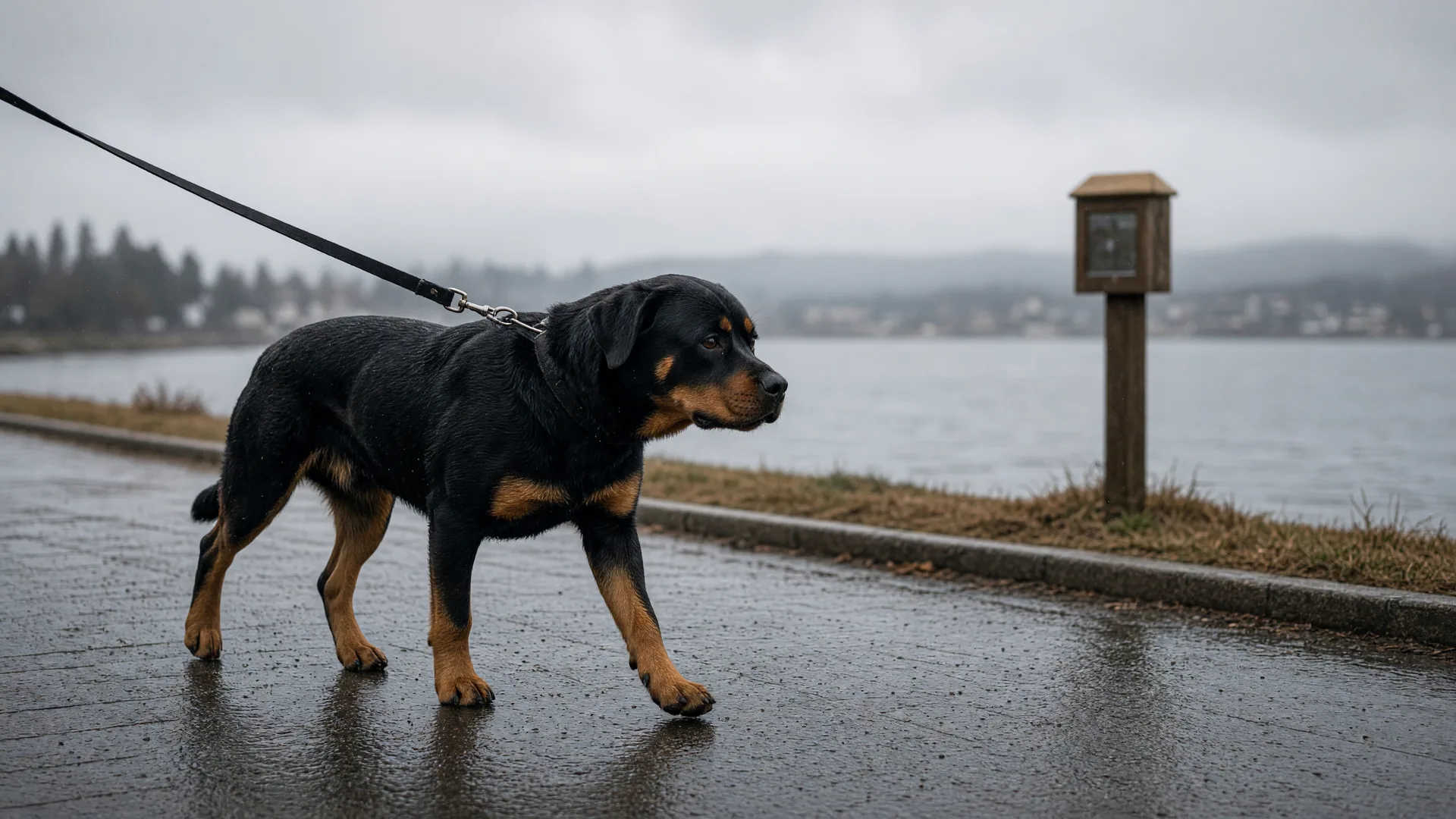
Short answer: no breed bans, but yes to dangerous dog rules. Neither the City of Victoria nor the Capital Regional District bans a single breed, British Columbia has no province-wide breed restrictions, and a dog here is judged by what it does, not what it looks like. That said, a dog can be officially designated dangerous, and once it is, the leash and muzzle laws get real very fast. I have walked a large Rottweiler around this city for years, so this one is personal for me, not just policy.
Is there a pit bull or Rottweiler ban in Victoria?
No. Victoria does not ban pit bulls, Rottweilers, or any other breed. The CRD is breed-neutral too, and BC has kept itself breed-neutral provincially, so enforcement is behaviour-based rather than breed-based. A CRD chief bylaw officer has said there are no breed-specific regulations anywhere in BC or Greater Victoria, and that pit bulls are not behind more attacks than other breeds.
Ziggy, our six-year-old Rottweiler, has never once been treated differently at any off-leash park because of his breed. The freedom to keep him as a normal dog is one of the things I appreciate about living here. What matters under the law is if a dog bites, or is known to be disposed to attacking, without provocation.
What counts as a "dangerous dog" in Victoria?
Under Victoria's Animal Responsibility Bylaw No. 11-044, an animal control officer can designate a dog dangerous if it bites a person or animal without provocation, has a known propensity, tendency, or disposition to attack without provocation, or has previously been designated dangerous. It is an individual designation, not a breed label.
The CRD's Animal Regulation and Impounding Bylaw No. 1465 defines "dangerous" the same way, in behavioural terms: attacked, bitten, or attempted to attack or chase a person, animal, or wildlife. If your dog does that, it is a genuine dog issue rather than a breed issue, and every responsible owner takes it seriously.
What happens if my dog is designated dangerous?
The rules tighten sharply. Once designated by the City of Victoria, your dog cannot be in a public place or on any private premises unless it is firmly held on a leash by a person competent to restrain it, and muzzled. You also have to keep the dog securely confined and follow the bylaw's signage requirements. Failing to follow the leash and muzzle rules can mean a fine, with dangerous-dog offences set at about $500.
The CRD adds its own layer: a designated dangerous dog must be muzzled and on a leash whenever it is off your property, your property must be secured so children under 12 cannot enter, and you must post a warning sign at each entrance that is visible and readable from the street. A dangerous dog is also barred from entering certain CRD areas. This is the part of the law that scares first-time owners, so I want to be clear it only ever applies to a dog formally designated after a real incident, not to any big or "scary-looking" dog.
Why the tethering rule should be on your radar
Separate from dangerous dog rules, Victoria's bylaw changed how dogs can be staked out. A dog cannot be tethered for more than 4 hours in any 24-hour period, and cannot be left tethered unattended. It is one of those quieter rules that catches people off guard, especially if a dog is left tied in a back yard while everyone is at work.
This matters when you are choosing a home, honestly. A fenced yard is far better than a tether for the dog's comfort and for staying on the right side of the bylaw. If a yard is unfenced and you are weighing fencing options, that is a home question we are happy to talk through.
What this means for everyday dog owners
In practice it means Victoria treats you and your dog as individuals. Keep your dog licensed, keep it under control, and the dangerous dog rules will never touch you. The municipalities, not the region, do most of the day-to-day enforcement, so the rules also differ slightly from one community to the next. Saanich, Oak Bay, Langford, and the others all run their own licensing and leash bylaws.
That is exactly why our dog bylaws guide exists, and the deeper guide to Greater Victoria dog bylaws breaks it down municipality by municipality. If you are new to the area, start with our municipality pages to see how your community handles dogs day to day.
The bottom line is reassuring: you can own a big dog in Victoria without fighting a breed law. The responsibility is entirely behavioural, and that is a fair trade. When you are looking at neighbourhoods with a large dog in mind, the practical questions are about yards, fencing, and how close the off-leash parks are, not if your breed is welcome.
If you are weighing a move with your dog in mind, book a call with us and we will match you to the right neighbourhood. Happy Homes Team helps dog owners find homes with real fences and easy trail access all over Greater Victoria.